
Locations
Fraud-Click Monitoring

boraware active

Request a Phone Consultation

Select Location *
Name *
Contact *
Preferred Contact Time *
Please write your inquiry. (100 characters max) *
Goldman Urology AI curation background image Goldman Urology AI curation background image
Goldman Urology AI curation icon

AI CURATION

Briefly describe your symptoms
to the smart Goldman AI.

Enter your question.
  • e.g. I urinate frequently and always feel residual urine
  • e.g. I feel a burning pain when I urinate
  • e.g. Itchy, stinging blisters on my genitals

Male Urological Disorders

We diagnose prostate and urethral problems as a whole, from acute inflammation to chronic symptoms.

The first step to protecting men's health:
even a minor urological condition should be treated in time.

From pain to inflammation, Goldman's expertise and technology
protect men's healthy everyday lives.

SINCE 2002, the hub of AI smart healthcare

SINCE 2002, the hub of AI smart healthcare

SINCE 2002, the hub of AI smart healthcare

SINCE 2002, the hub of AI smart healthcare

What are male urological disorders?

Male urological disorders broadly refer to diseases related to the male reproductive organs.
At Goldman, we diagnose the cause, focusing in particular on hydrocele, testicular torsion, acute epididymitis, undescended testis, and balanoposthitis, and systematically provide treatment tailored to each individual.
Staff holding a male reproductive anatomy model during a consultation
Motif image

Male urological disorders: think you might have one?
Types, symptoms, and treatments of urological disorders at a glance

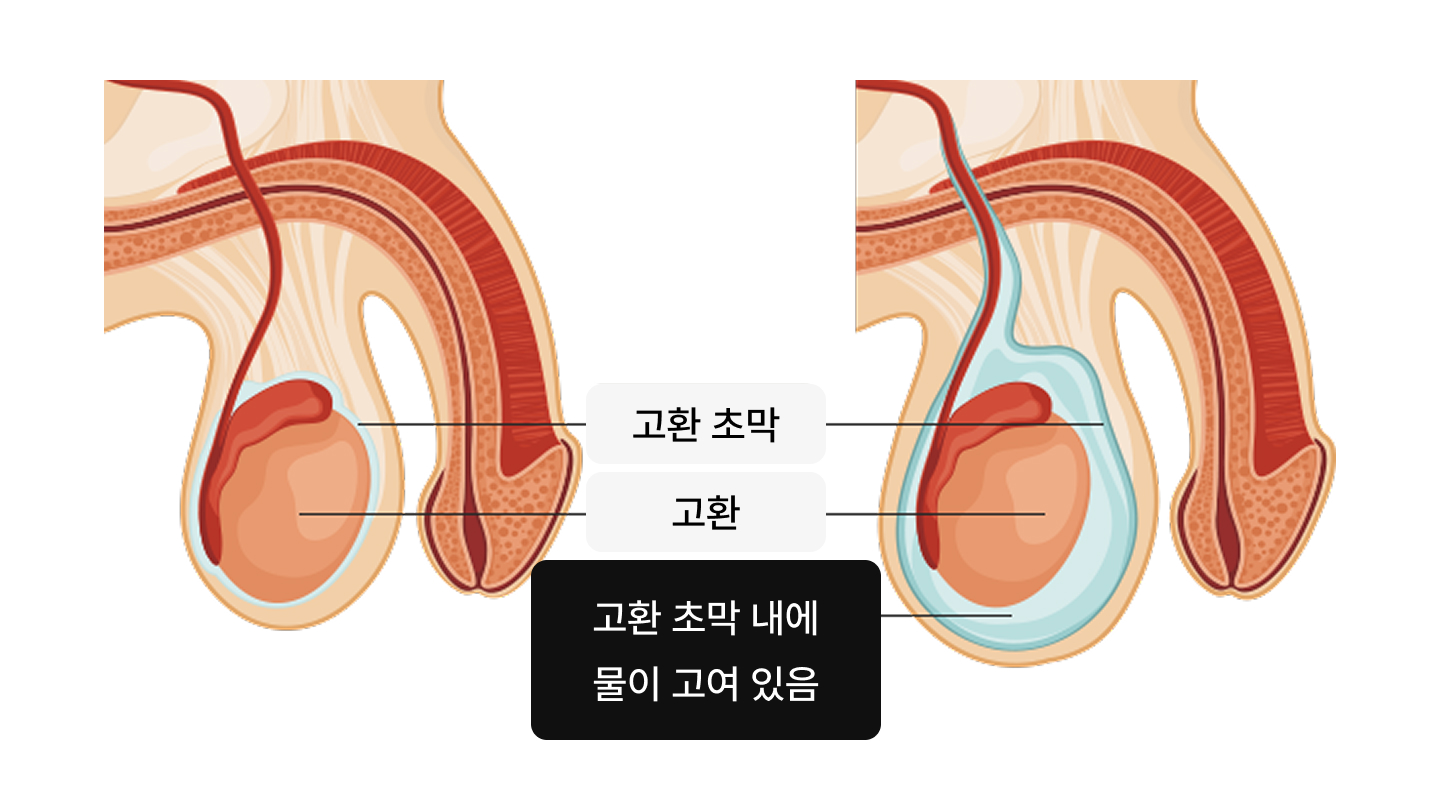
Hydrocele illustrationTunica vaginalisTestisFluid collects inside the tunica vaginalis
What is a hydrocele?
A hydrocele is a condition in which fluid collects around the testis and enlarges the scrotum.
It usually develops in one side of the scrotum, but it can occur on both sides as well.
It is caused by fluid pooling inside the tunica vaginalis, the membrane that surrounds the testis, and it mainly appears in children. It is painless, but it keeps growing over time, and in young children severe cases can even lead to a hernia.
Causes of hydrocele
  • Communicating hydrocele (children)
    A communicating hydrocele forms when the peritoneal passage opened as the testicle descends in the womb fails to close, letting abdominal fluid flow into the scrotum.
  • Non-communicating hydrocele (adults)
    A non-communicating hydrocele is a buildup of fluid inside the scrotum, which accumulates in a fixed pocket with no connection to the abdominal cavity.It is caused by inflammation, trauma, or tumors, and characteristically grows larger over time.
Symptoms of hydrocele
A hydrocele causes painless swelling of the scrotum and may feel like a soft or firm lump to the touch.
A characteristic sign is that it glows red when a light is shone through it, and in most cases it resolves on its own over time.
  • Scrotal swelling
  • A lump around the testicle
  • No particular pain
  • Light passes through
  • A difference in size between the two sides of the scrotum
  • Soft or firm to the touch
Diagnosis of hydrocele
Goldman looks at the structural cause, not just the symptoms, so we diagnose quickly and accurately with only the tests you truly need.
  • Medical staff taking a patient history
    Physical examination
    We check how long the swelling has lasted, any pain, and any change in size through consultation and a physical exam.
  • Transillumination test
    Transillumination test
    Shining a light through the scrotum shows whether it passes through, confirming a hydrocele.
  • Ultrasound Examination
    Scrotal ultrasound
    If light does not pass through well, ultrasound is used to confirm precisely whether a hydrocele is present and how large it is.
Treatments for hydrocele
In children, a hydrocele is usually watched until age 1; in adults, surgery should be considered.
Treatment of communicating hydrocele (children) Treatment of non-communicating hydrocele (adults)
Treatment principles Most hydroceles in children heal on their own within the first year of life.
The usual treatment principle is therefore to monitor the condition without surgery until the child's first birthday.
Hydroceles in adults rarely resolve on their own.If the symptoms are not severe and cause no discomfort, observation alone is an option, but if fluid keeps building up or causes pain or discomfort, surgery is needed for a definitive cure.
Surgical treatment If it persists past age 1 or is very large, surgery is considered.The operation is simple — a small groin incision to tie off the passage between the abdominal cavity and scrotum — with a low chance of recurrence. The scrotum is incised and the sac in which the fluid collects (the tunica vaginalis) is removed.This surgery keeps fluid from collecting again and is a definitive solution that prevents recurrence.
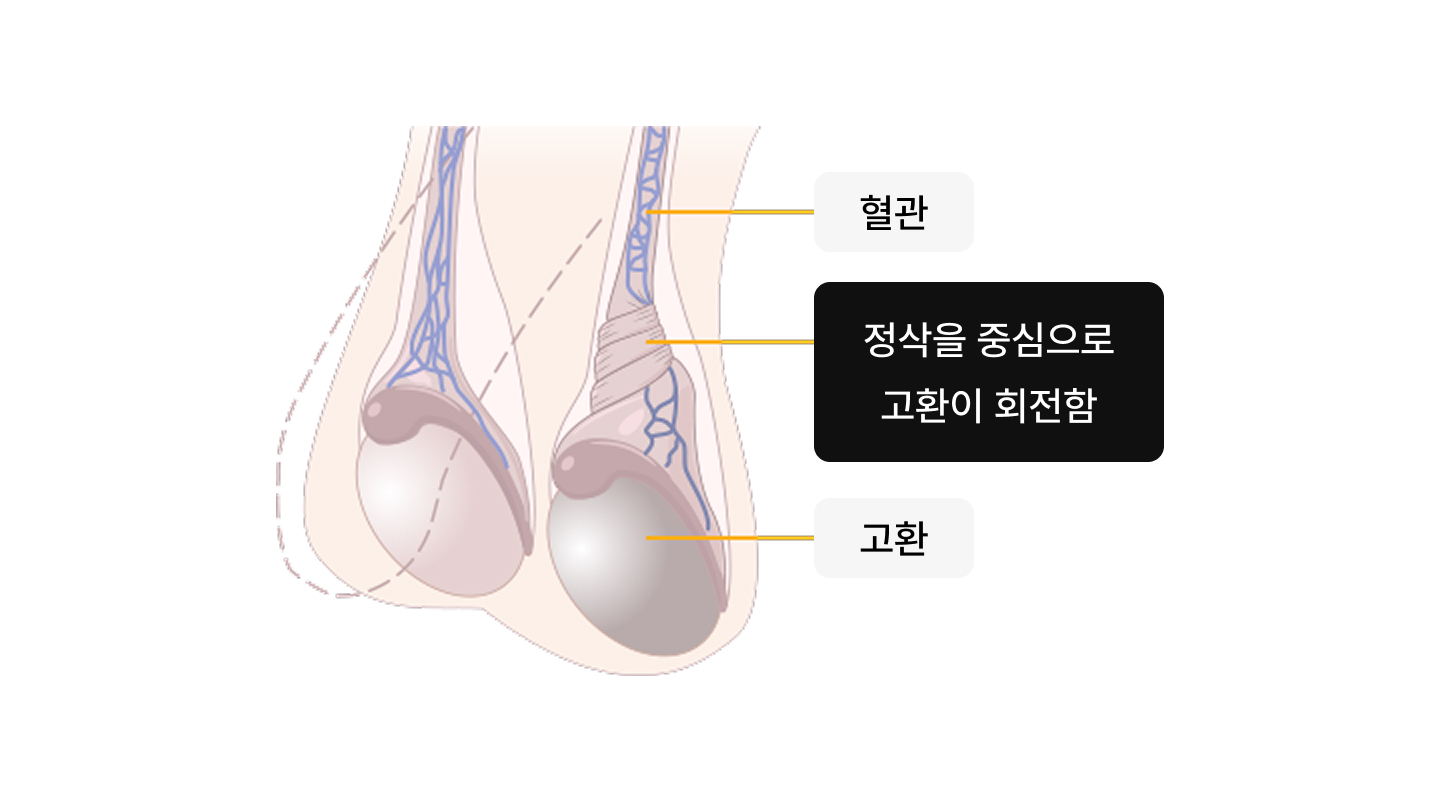
Testicular torsion illustrationBlood vesselsTestis twists around the spermatic cordTestis
What is testicular torsion?
Testicular torsion is an emergency condition in which the testicle twists around the spermatic cord and its blood flow is cut off.It occurs mainly during puberty (ages 12–18) and is marked by sudden, severe pain.If it is not treated within 4 to 6 hours the testicle can be damaged, so you must go to a hospital immediately.
Causes of testicular torsion
  • Man feeling discomfort in the testicle
    Poor fixation of the testicle
    When the testicle and epididymis are not firmly attached to the fascia or muscle around the spermatic cord and hang freely, the testicle rotates easily and torsion is more likely.
  • 3D illustration of the cremaster muscle
    Excessive contraction of the cremaster muscle
    When the cremaster muscle, which lifts the testicle, contracts suddenly, the spermatic cord can twist excessively and cause torsion.
  • Virus
    Specific risk factors
    Torsion is also more common with an undescended testicle or after a scrotal injury.
  • Man sleeping
    Onset during sleep
    It often happens unnoticed during sleep, so many patients come to the emergency room with acute pain in the early morning hours.
Symptoms of testicular torsion
The hallmark of testicular torsion is sudden testicular pain; over time the scrotum swells and turns red. Pain can spread to the lower abdomen and groin, and severe cases may bring nausea or vomiting.
  • Scrotal swelling
  • Redness of the scrotal skin
  • Pain in the scrotum and lower abdomen
  • Nausea and vomiting
  • High fever and chills
Diagnosing testicular torsion
Testicular torsion is an emergency and must be diagnosed and treated quickly. At Goldman, we move fast with a physical examination, Doppler ultrasound, and blood tests.
  • Man undergoing a physical examination
    Physical examination
    We check the testicle's position, size, and tenderness to diagnose torsion.
  • Doppler ultrasound
    Doppler ultrasound
    Doppler ultrasound shows how much blood is reaching the testicle.
  • Blood test
    Blood test
    A blood test checks for inflammation to rule out orchitis.
Treatment of testicular torsion
In testicular torsion, every delay raises the chance the testicle will die. Treatment must begin within 4 to 6 hours of onset; in the worst case the testicle may have to be removed.
  • Point
    Manual untwisting
    The twisted testicle is untwisted by hand, but the effect is temporary and the torsion can recur.
  • Point
    Surgical orchiopexy (fixation of the testicle)
    Surgery to untwist the testicle and fix it in place to prevent recurrence — the standard treatment.
  • Point
    Fixation of the opposite testicle
    Even when torsion occurs on one side it can later occur on the other, so both testicles are usually fixed during surgery.
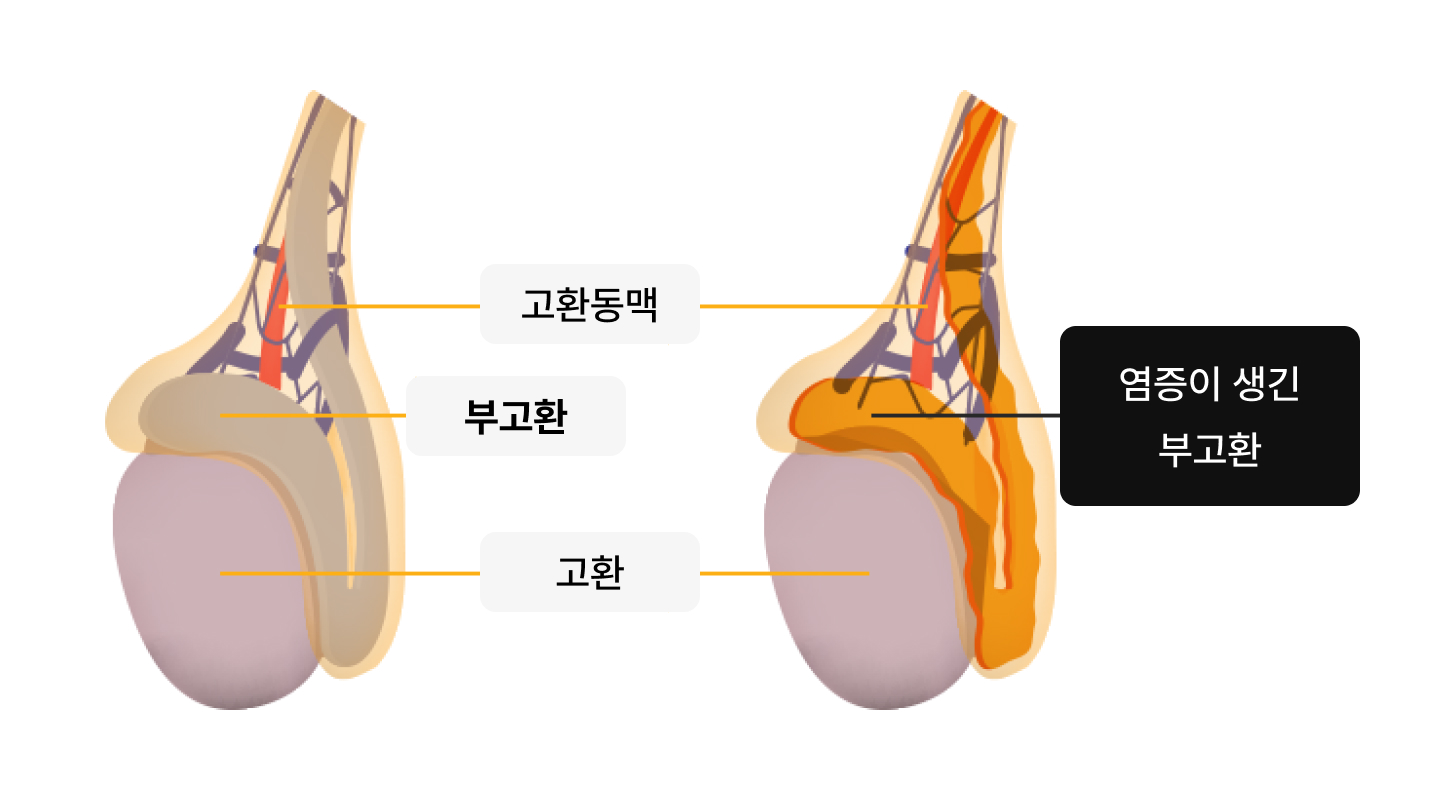
Acute epididymitis illustrationTesticular arteryEpididymisTestisInflamed epididymis
What is acute epididymitis?
Acute epididymitis is sudden inflammation of the epididymis, the tube behind the testicle that stores and matures sperm.It usually causes acute pain and swelling on one side and needs prompt treatment.
Causes of acute epididymitis
  • STD pathogens
    Sexually transmitted infections
    Bacteria from sexually transmitted infections such as chlamydia and gonorrhea travel up the urethra and infect the epididymis.
  • Urinary tract infection bacteria
    Urinary tract infection
    A urinary tract infection can allow bacteria to flow back into the epididymis and cause inflammation.
  • Man feeling discomfort in the epididymis
    Reflux of urine
    Rarely, urine flows back from the urethra into the epididymis, carrying bacteria with it and causing inflammation.
  • 3D illustration of the testicle
    Other bacteria and viruses
    Rarely, it can also be caused by unusual bacteria such as tuberculosis bacilli, or by viruses.
Symptoms of acute epididymitis
Acute epididymitis is marked by a swollen, painful scrotum and fever. It may bring urethral discharge or painful urination; early treatment prevents complications.
  • Scrotal swelling
  • Scrotal pain
  • High fever, chills, sweating
  • Redness of the scrotal skin or discharge of pus
  • Urethral discharge and pain on urination
  • Vomiting, diarrhea
Diagnosing acute epididymitis
With acute epididymitis, an accurate diagnosis is where treatment begins. At Goldman, we quickly identify the site and cause of the inflammation through consultation, physical examination, inflammation tests, and Doppler ultrasound.
  • Medical staff taking a patient history
    Medical interview and physical examination
    A basic exam checks the symptoms and where the pain is.
  • Restroom
    Testing for inflammation
    Urine, urethral discharge, and blood tests check for inflammation.
  • Doppler ultrasound scan screen
    Doppler ultrasound
    Doppler ultrasound tells testicular conditions apart for an accurate diagnosis.
Treatment of acute epididymitis
Acute epididymitis is treated mainly with antibiotics, plus supportive care to ease symptoms. Rest and scrotal support matter, and painkillers or fever reducers are given as needed.
  • Point
    Early rest and local treatment
    During the acute stage (3 to 4 days), complete rest and elevation of the scrotum relieve pain; cold compresses are used with a high fever and warm compresses when there is no fever, to calm the inflammation.
  • Point
    Pain relief and improved blood flow
    20 cc of 1% lidocaine is injected into the spermatic cord above the testicle to reduce pain and improve blood flow, with painkillers and fever reducers used alongside it if needed.
  • Point
    Antibiotics matched to the causative organism
    Once we know whether the infection is sexually transmitted, antibiotics matched to the organism work better.
  • Point
    Recovery and follow-up tests
    Symptoms usually ease within 2 weeks, with recovery in about 1 month.Epididymitis affecting both sides requires a semen analysis to check for complications such as azoospermia.
What is an undescended testicle?
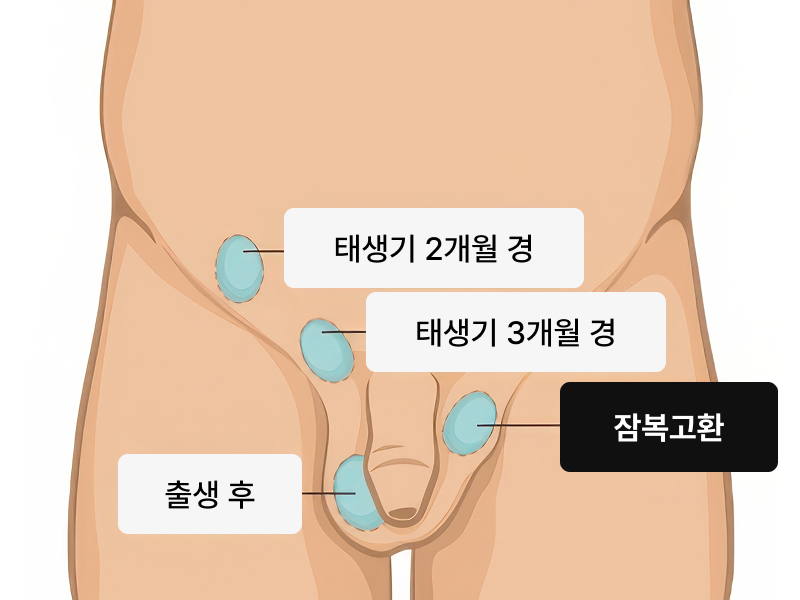
An undescended testicle stays in the abdomen or groin instead of the scrotum, where it belongs. It often cannot be felt from the outside, and depending on its position the size or function of the testicle may be reduced. Treatment between 6 and 12 months of age can lower the risk of future infertility and other complications.

Normal descent of the testicle and an undescended testicle

Undescended testicle (cryptorchidism) illustrationAbout 2 months' gestationAbout 3 months' gestationUndescended testisAfter birth

Ultrasound of an undescended testicle

Ultrasound of an undescended testicle
Causes of an undescended testicle
  • Genes
    Genetic Factors
    There may be a link with family history, but no specific genetic abnormality has been shown to be a direct cause.
  • Fetal ultrasound image
    Hormonal abnormality
    A male hormone imbalance during fetal development can affect testicular descent.
  • Image symbolizing an anatomical abnormality
    Anatomical abnormality
    A problem in the structures that connect the testicle to the scrotum can keep the testicle from descending normally.
  • Medication
    Other
    Various factors, such as premature birth, low birth weight, and medication taken during pregnancy, may act in combination.
Symptoms of an undescended testicle
Hallmark signs: the testicle cannot be felt, and there is a risk of testicular torsion and hernia. Because this can affect genital development during growth, early diagnosis and treatment are needed.
  • Abnormal scrotal size
  • Testicle cannot be felt
  • Possible accompanying hernia
  • Increased risk of testicular torsion
Diagnosing an undescended testicle
An undescended testicle is located precisely by physical exam, ultrasound, and laparoscopy. Drawing on experience with both children and adults, Goldman provides accurate diagnosis and tailored treatment.
  • Medical staff taking a patient history
    Medical interview and physical examination
    The doctor palpates the testicle to check its position in the scrotum.
  • Ultrasound Examination
    Ultrasound Examination
    Confirms the testicle's position and rules out other conditions.
  • Laparoscopy
    Laparoscopy
    Performed to locate and treat the testicle when it lies inside the abdomen or cannot be felt by hand.
Treatments for undescended testicle
An undescended testicle is mainly treated with surgery that fixes it in the scrotum, ideally between 6 months and 1 year of age. If the testicle has shrunk or lost function, it may need to be removed.
  • Point
    Orchiopexy
    Brings the testicle into the scrotum and fixes it in place — a low-risk, high-success standard treatment.
  • Point
    Staged surgery
    If the vessels are too short to lower the testicle at once, a two-stage operation brings it down gradually.
  • Point
    Testicular autotransplantation
    A shrunken or high-sitting testicle is reconnected to healthy blood vessels to restore function.
  • Point
    Hormone therapy
    Male hormone injections are used to encourage the testicle to descend into the scrotum; the effect is limited, but it can be tried when needed.
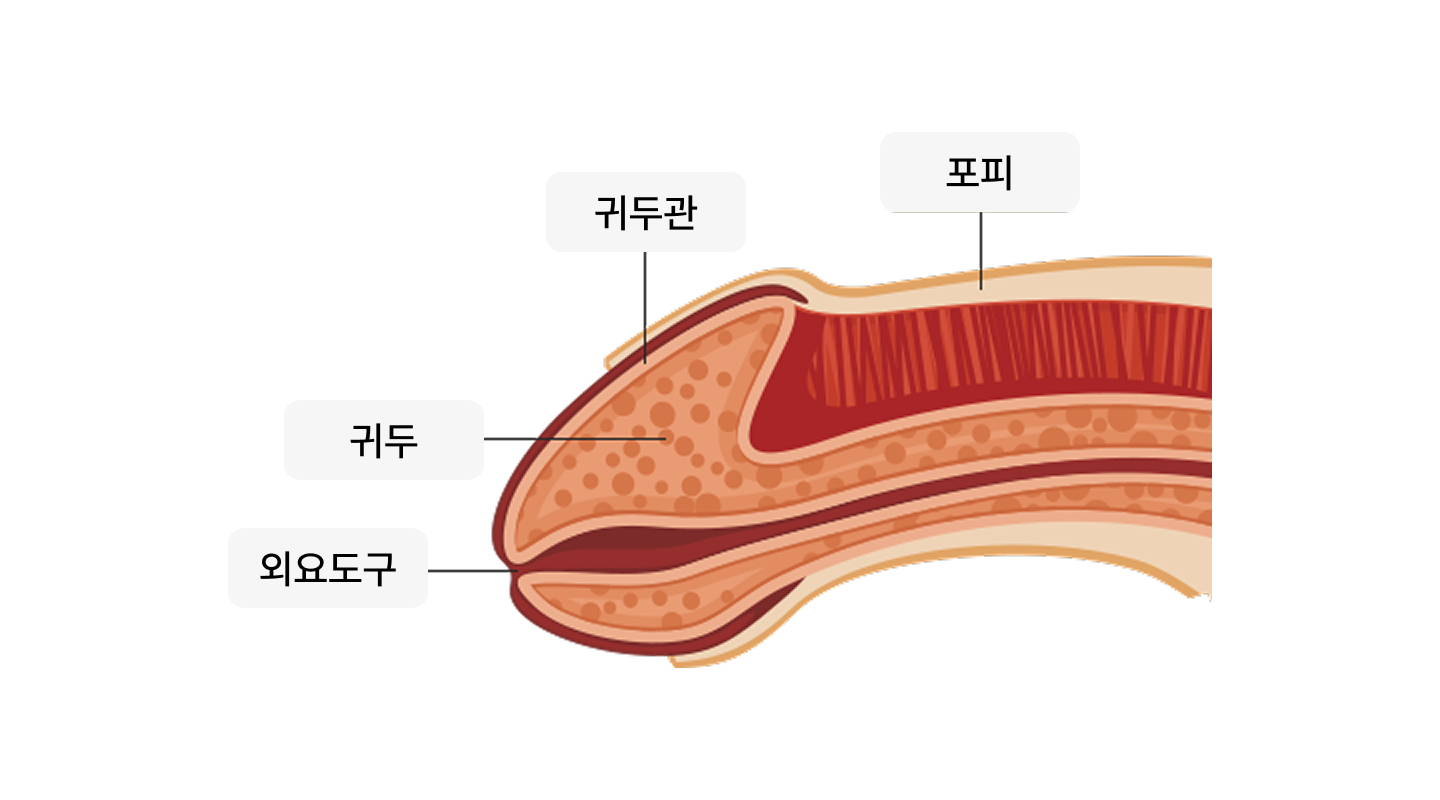
Balanoposthitis illustrationCorona of the glansForeskinGlansUrethral opening
What is balanoposthitis?
Balanoposthitis is inflammation of the glans (tip of the penis) and the foreskin covering it.It mainly affects uncircumcised boys; diapers or frequent contact can trigger it. Most cases are local and improve with good hygiene alone.
Causes of balanoposthitis
  • Bacteria
    Infection
    Balanoposthitis can develop from infection with fungi, staphylococci, streptococci, and similar organisms.
  • Person washing their hands
    Poor hygiene
    Allergic reactions to or irritation from soaps, cleansers, or condoms can cause inflammation.
  • Virus
    Allergy and irritation
    Allergic reactions to or irritation from soaps, cleansers, or condoms can cause inflammation.
  • Blood glucose meter
    Underlying conditions
    Underlying conditions such as diabetes or a weakened immune system raise the risk of balanoposthitis.
Symptoms of balanoposthitis
It causes redness, swelling, itching, pain, and more discharge on the glans and foreskin. Severe cases may bring difficulty urinating or swelling of the urethral opening.
  • Redness and swelling
  • Severe itching
  • Pain from inflammation
  • Increased pus or sticky discharge
  • Pain and difficulty when urinating
  • Swelling at the urethral opening
Diagnosis of balanoposthitis
Balanoposthitis is usually diagnosed by physical exam; severe or persistent cases may need detailed tests to find the exact cause.
  • Medical staff performing a physical examination
    Physical examination
    Most cases are diagnosed by directly examining the glans and foreskin.
  • Blood Test
    Blood and urine tests
    Blood and urine tests identify the bacteria involved and check for infection.
  • Image symbolizing Multi-PCR testing
    Multi-PCR test
    Several organisms are tested at once to pinpoint the exact cause.
  • Microscope
    Biopsy
    A biopsy is done when inflammation is severe or diagnosis is difficult.
Treatments for balanoposthitis
Accurate diagnosis and stepwise treatment are key to treating balanoposthitis. Goldman's deep clinical experience and systematic care help you recover fully and fast.
  • Point
    Ointment and hygiene care
    An antiseptic or antibiotic ointment is applied to the inflamed area, and the foreskin and glans are gently cleaned to keep them hygienic.Mild inflammation can improve with this alone.
  • Point
    Oral medication
    When the inflammation is severe or accompanied by pain or discharge, antibiotics and anti-inflammatory painkillers are used together to bring the inflammation down quickly.
  • Point
    Foreskin care education
    We teach correct cleaning and care of the foreskin and glans to suit the patient's age and stage of growth, preventing inflammation and supporting healthy development.
  • Point
    Circumcision to prevent recurrence
    If inflammation recurs or the foreskin is too tight to keep clean, circumcision both prevents and treats it.

Questions about male urological disorders? Get answers now.

Goldman's know-how gives clear answers to patients' questions.
  • The testicle twists, cutting off its blood supply.Without surgery within 6 hours it can die (necrosis), so emergency treatment is essential.

  • Usually bacterial, it causes scrotal pain, swelling, and heat.Because it mimics testicular torsion, precise diagnosis matters.

  • The testicle has not settled into the scrotum, which raises the risk of infertility and testicular cancer, so early detection and treatment are needed.

  • It is inflammation between the glans and foreskin caused by poor hygiene or bacterial infection, with itching, pain, and discharge.

Real treatment stories
as told by patients and medical staff

From the start of treatment to recovery!Real stories build trust.

More Treatment Cases
It’s Advanced!

TOP 7 Reasons Goldman Leads

GOLDMAN Special 7

1
7
  • Surgery scene
    Urology Only

    25 Years

    1
  • Reviewing treatment data
    Unrivaled Treatment Data

    2 Million+

    2
  • Specialist during surgery
    BPH Surgery Data

    6,500+

    3
  • Urinary stone treatment equipment
    Urinary Stone Treatment Data

    10,000+

    4
  • HoLEP surgery equipment
    Nationwide HoLEP Surgeries

    40.8% Performed

    5
  • Goldman Urology Clinic medical staff
    Experienced Medical Team

    25 Years of Clinical Experience

    6
  • AI symbolic image
    From Diagnosis to Surgery

    State-of-the-Art AI System

    7

Urological concerns?
Solve them at a Goldman near you.

If you consent to the use of location information, you can find the Goldman branch closest to you.