
Locations
Fraud-Click Monitoring

boraware active

Request a Phone Consultation

Select Location *
Name *
Contact *
Preferred Contact Time *
Please write your inquiry. (100 characters max) *
Goldman Urology AI curation background image Goldman Urology AI curation background image
Goldman Urology AI curation icon

AI CURATION

Briefly describe your symptoms
to the smart Goldman AI.

Enter your question.
  • e.g. I urinate frequently and always feel residual urine
  • e.g. I feel a burning pain when I urinate
  • e.g. Itchy, stinging blisters on my genitals

Acute Urinary Retention

A sudden emergency in which no urine comes out at all — prompt treatment is needed.

Sudden urinary retention:
waiting it out can put even your kidneys at risk.

If urine suddenly stops coming out, prompt action is needed.
Delayed treatment can lead to serious complications.

SINCE 2002, the hub of AI smart healthcare

SINCE 2002, the hub of AI smart healthcare

SINCE 2002, the hub of AI smart healthcare

SINCE 2002, the hub of AI smart healthcare
Acute urinary retention: why does it happen?

Acute urinary retention is an emergency condition in which no urine comes out at all, and it commonly occurs in middle-aged and older men with benign prostatic hyperplasia (BPH).
About 70% of patients have it in connection with BPH, and because there is a risk of bladder damage, prompt treatment and removing the underlying cause are important.
A man feeling discomfort in the bladder

Acute urinary retention, why does it develop?

Acute urinary retention develops from a variety of causes, including BPH and taking cold medicine.
Antihistamines and sympathomimetics in particular reduce bladder function and can trigger urinary retention, and exposure to cold temperatures during seasonal changes can make symptoms worse.
  • Comparison of a normal prostate and an enlarged prostateEnlarged prostateNormal prostate

    Benign Prostatic Hyperplasia (BPH)

    A leading cause of urinary retention,
    it is especially common in middle-aged and older men.
  • Medication

    Taking cold medicine or certain other drugs

    Medications can weaken bladder muscle contraction
    and cause difficulty urinating.
  • Snowflake

    Sharp drops in temperature (seasonal changes)

    Exposure to cold morning and night air activates the sympathetic nervous system,
    which lowers bladder function and raises the risk of urinary retention.
Motif image

Acute urinary retention:
what symptoms come with it?

During urinary retention, the bladder can expand to as much as 1500cc, more than three times its normal capacity (400~500cc),
which can make the lower abdomen swell hard and cause severe pain.
  • Flank pain

    It can occur when the urinary tract is blocked or kidney pressure builds.
  • Lower abdominal distension

    Unpassed urine swells the bladder, causing discomfort.
  • Hematuria

    Urinary tract irritation or injury causes blood in the urine.
  • Urinary Tract Infection

    Bacteria enter the urinary tract, causing inflammation and discomfort.
  • Pus in the urine

    In a severe infection, pus may appear in the urine.
  • Painful urination

    Pain felt when passing urine, usually related to inflammation or infection.
  • Hesitancy

    Urine flows poorly or is slow to start.
  • Uremia

    A dangerous state in which urine cannot be passed and waste products build up in the body.

Diagnosing acute urinary retention:
what methods are used?

If acute urinary retention is left untreated, bladder muscle function declines, and rising bladder pressure can impair blood flow and damage tissue.
In severe cases kidney function can also deteriorate, so early, accurate diagnosis and identifying the underlying cause are important.
Medical staff taking a patient history

Basic Tests

Consultation and testing show how severe the symptoms are and what causes them.
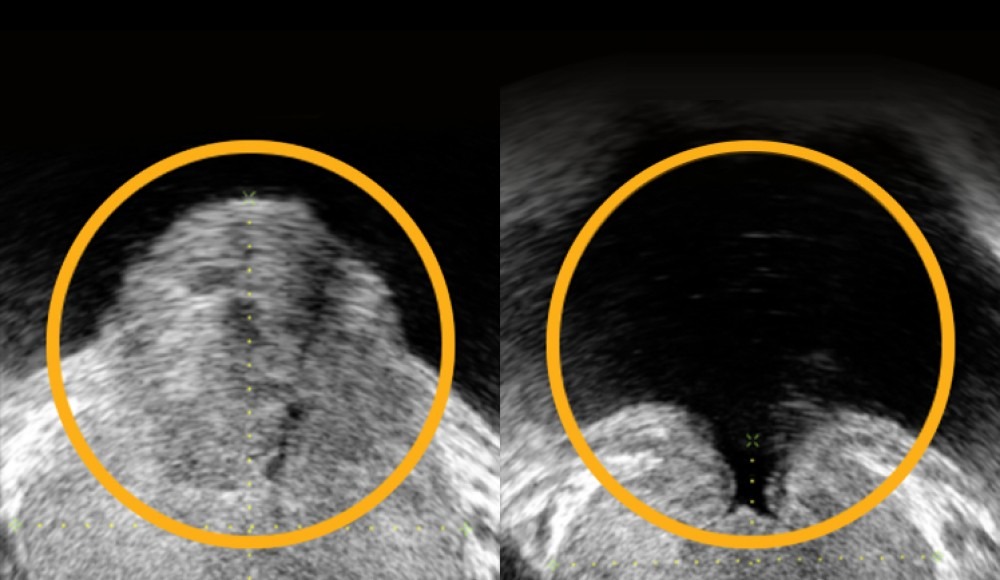
Bladder Ultrasound

Bladder Ultrasound

We check bladder urine volume and the bladder wall to find the cause of acute urinary retention.
 a urinalysis

Blood and Urine Tests

We identify the condition behind the retention and assess overall health.

Treating acute urinary retention:
how does it work?

When acute urinary retention occurs, a catheter is inserted to drain the urine as an emergency measure, and to help the damaged bladder recover, keeping the catheter in place for 1~2 weeks may be necessary.
  • Medication

    Medication Therapy

    For acute urinary retention caused by benign prostatic hyperplasia, alpha-blockers are used to improve urination, and when bladder muscle contractility is reduced, cholinergic medication helps restore bladder function.
  • Urinary Catheter

    Non-surgical treatment

    Catheterization is a non-surgical emergency treatment that drains urine through the urethra or the abdomen without any incision.The catheter stays in place for 1–2 weeks to relieve pain and protect the bladder; afterwards we check whether natural urination has returned and provide further treatment if needed.
  • Medical team performing surgery

    Surgical treatment

    Surgery is performed when medication does not work or acute urinary retention keeps recurring; prostate resection and urethral dilation are the typical procedures.
Goldman's Key Points in Treating Acute Urinary Retention

Fast Track

Goldman has introduced a Fast Track for urinary retention patients,
moving quickly from diagnosis to treatment.
  • Step

    Walk in without an appointment!
  • Step

    Testing and identification of the cause on the day of your visit
  • Step

    Treatment or surgery completed within 1–2 days
  • Step

    Immediate admission if needed

Questions about acute urinary retention? Get answers now.

Goldman's know-how gives clear answers to patients' questions.
  • Prostate care, caution with certain medications, and dressing warmly in seasonal changes all help.

  • Most often men over 50, especially those with benign prostatic hyperplasia.

  • Yes.Some antihistamines and sympathomimetics can weaken the bladder muscle and trigger retention.

  • Bladder function gradually declines, and kidney damage or hydronephrosis can follow.

It’s Advanced!

TOP 7 Reasons Goldman Leads

GOLDMAN Special 7

1
7
  • Surgery scene
    Urology Only

    25 Years

    1
  • Reviewing treatment data
    Unrivaled Treatment Data

    2 Million+

    2
  • Specialist during surgery
    BPH Surgery Data

    6,500+

    3
  • Urinary stone treatment equipment
    Urinary Stone Treatment Data

    10,000+

    4
  • HoLEP surgery equipment
    Nationwide HoLEP Surgeries

    40.8% Performed

    5
  • Goldman Urology Clinic medical staff
    Experienced Medical Team

    25 Years of Clinical Experience

    6
  • AI symbolic image
    From Diagnosis to Surgery

    State-of-the-Art AI System

    7

Urological concerns?
Solve them at a Goldman near you.

If you consent to the use of location information, you can find the Goldman branch closest to you.