STEP 01
A cystoscope is inserted through the urethra to check the condition
of the enlarged prostatic urethra.
of the enlarged prostatic urethra.
boraware active


AI CURATION
Briefly describe your symptoms
to the smart Goldman AI.

A non-resective treatment that temporarily places a Nitinol stent to open the urethra.
SINCE 2002, the hub of AI smart healthcare
SINCE 2002, the hub of AI smart healthcare
SINCE 2002, the hub of AI smart healthcare
SINCE 2002, the hub of AI smart healthcare




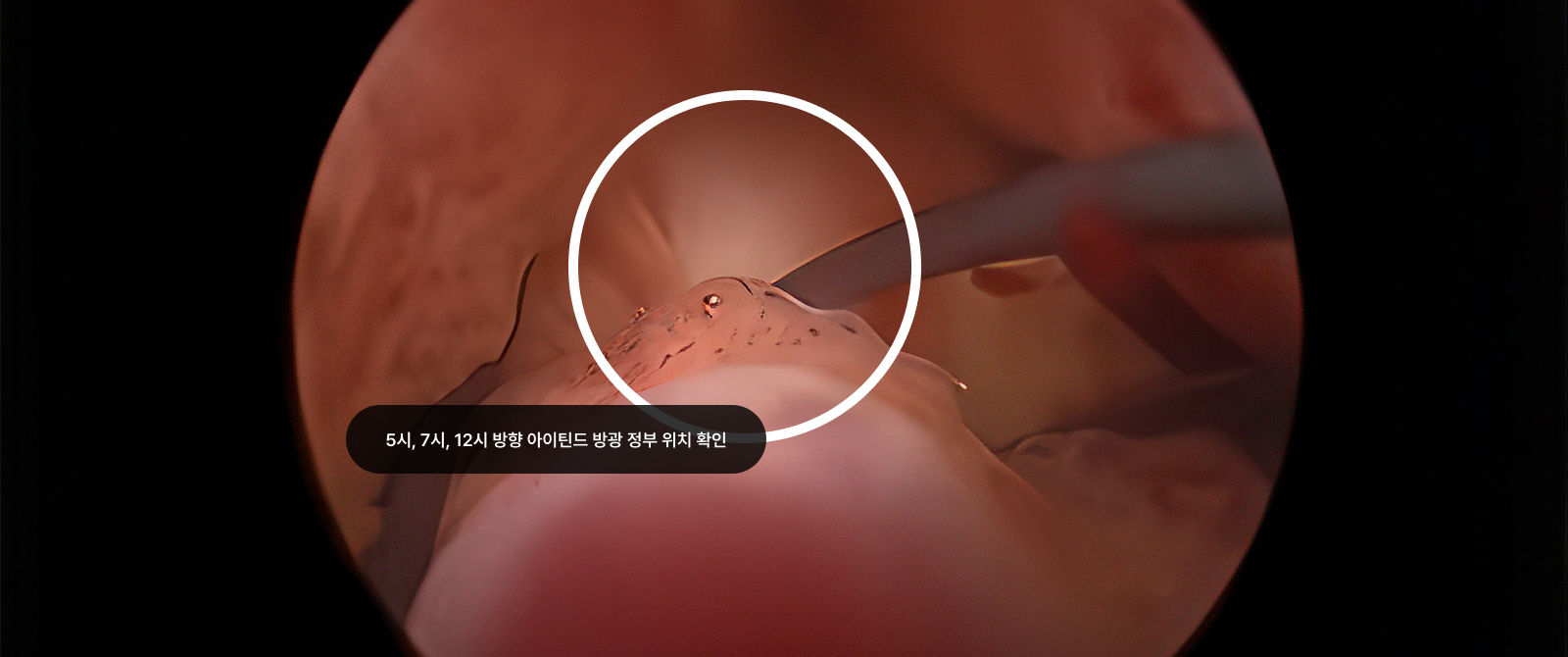 Checking the iTind position at 5, 7 and 12 o'clock
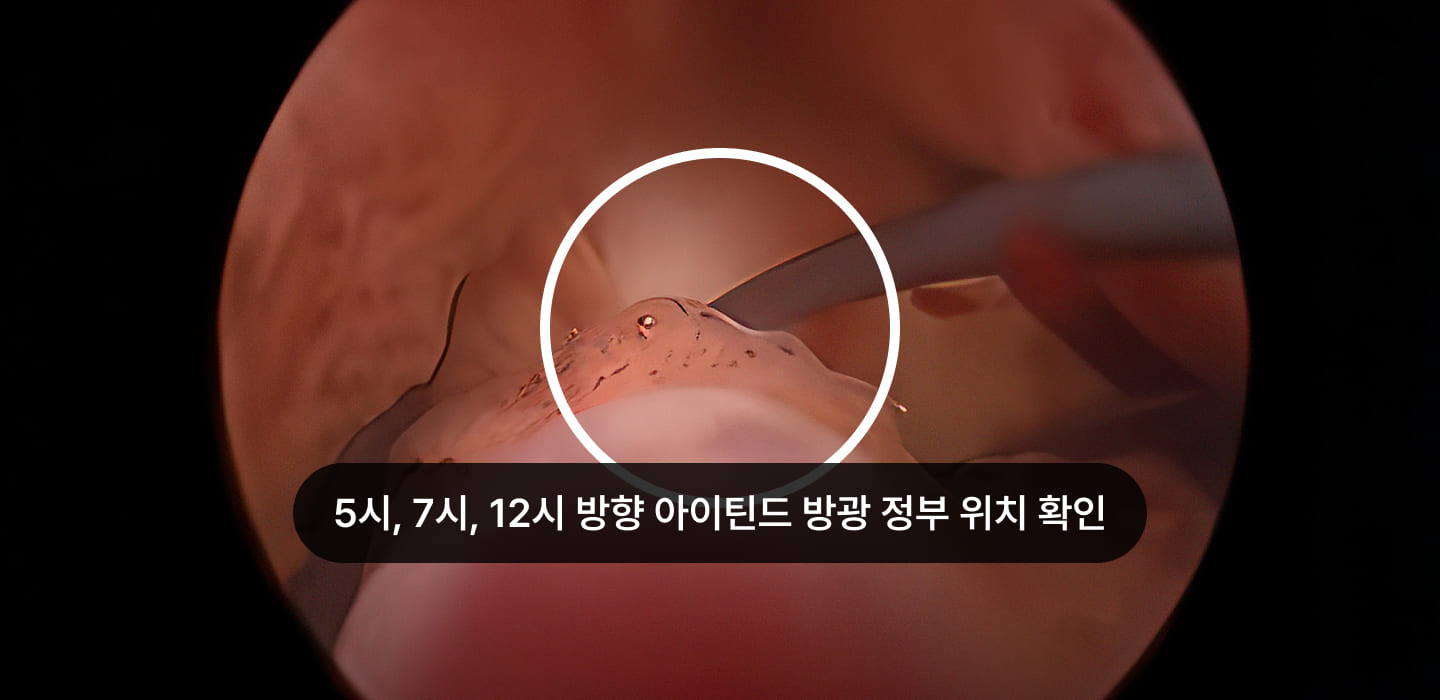 Checking the iTind position at 5, 7 and 12 o'clock
| Conventional BPH surgery (TURP) | VS |
|---|---|
| Enlarged tissue is resected endoscopically (risk of bleeding) | Surgical method |
| Hospital stay of 1 day or more required | Hospitalization |
| Spinal or general anesthesia | Type of anesthesia |
| Needed for several days | Urinary catheter use |
| Occurs in most cases | Retrograde ejaculation |
| Urinary incontinence, urethral stricture, and erectile dysfunction may occur | Complications |
| iTind |
|---|
| A temporary device is placed and then removed (minimally invasive) |
| Same-day discharge possible |
| Spinal or caudal anesthesia |
| Usually not needed |
| Rarely occurs |
| Low likelihood of long-term complications |


The incision-free iTind procedure: its results depend on the skill of the medical team.
With long clinical experience and technical expertise, Goldman provides precise and safe BPH treatment.
Every prostate is different, so no single fixed price applies, but as a rough guide, approx. KRW 5–6 million is what you can expect.
An accurate estimate follows detailed prostate testing and a consultation.
Most cases are outpatient, with no hospitalization.
A brief observation period afterward is all you need before going home.
The procedure takes about 5–10 minutes under local or regional anesthesia.
The iTind device stays in the urethra for 5–7 days, then passes naturally or is removed by the doctor.
iTind widens the urethra, so flow improves gradually and symptoms usually ease within 2–4 weeks.
Temporary pain at the site, blood in urine, a residual-urine feeling, or stinging when urinating may occur, but usually clear within days.
If symptoms do not improve or recur, other treatments (medication, surgery, etc.) can be considered, and because iTind does not resect prostate tissue, some patients may need a repeat procedure.
Reliable urology information — check it through video.
More on YouTubeGoldman Urology's key innovation news: latest conference presentations, research achievements, and new-technology adoption.
More NoticesIf you consent to the use of location information, you can find the Goldman branch closest to you.


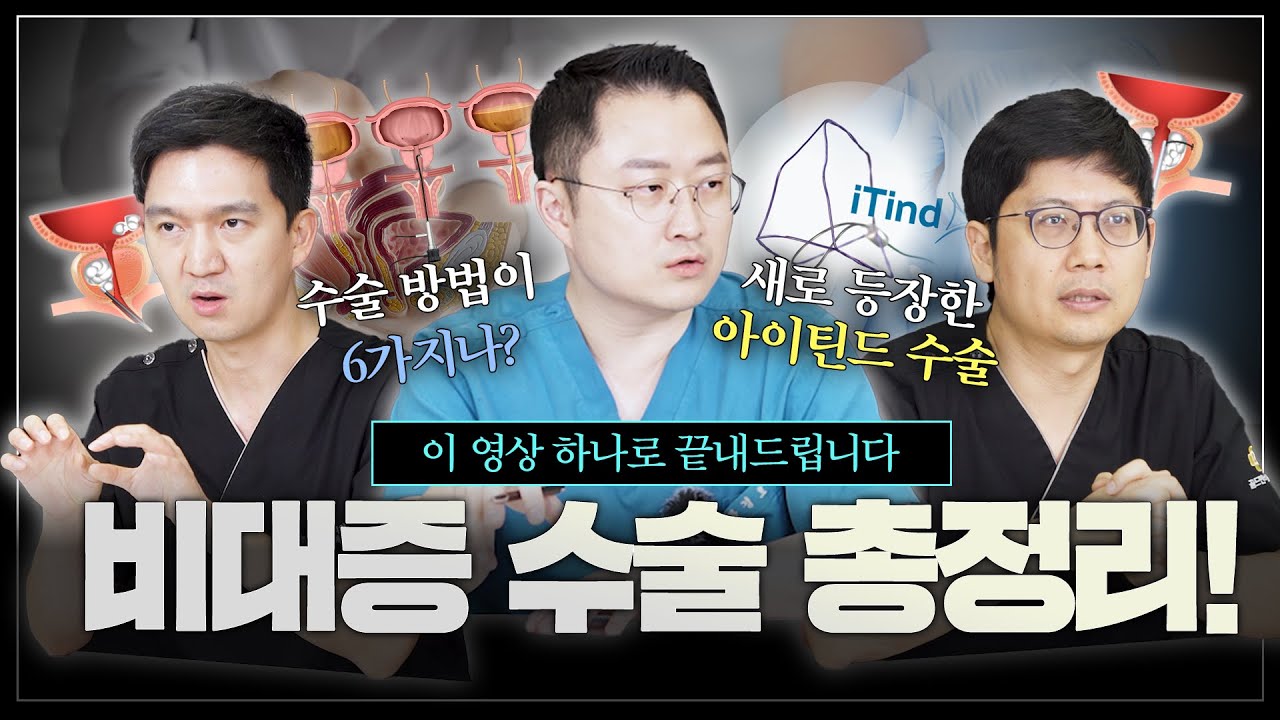
![골드만비뇨의학과 전립선 비대증 새로운 치료 패러다임 '아이틴드 완전정복' 풀영상 [조정호원장님, 류경호 원장님의 아이틴드 총정리]](/webp/_File/videoTalk//y_N56CH_foXLo.jpg.webp)
![Goldman Urology BPH treatment without the burden? Can I have MIST too? [BPH MIST Part 2]](/webp/_File/videoTalk//y_JcdFFjh0Ba0.jpg.webp)

![Goldman Urology: iTind procedure — you heard it doesn't work in these cases? Q&A on iTind, a new treatment for BPH [Dr. Ryu Kyoung Ho and Dr. Cho Jeong Ho on iTind, Part 3]](/webp/_File/videoTalk//y_Zp1mjOJQSoI.jpg.webp)
![Goldman Urology: The iTind procedure for BPH — just inserting a stent expands the bladder inlet fivefold? (temporary Nitinol placement) [Dr. Ryu Kyoung Ho and Dr. Cho Jeong Ho on iTind, Part 2]](/webp/_File/videoTalk//y_7rHF22nafM4.jpg.webp)
![Goldman Urology: Better results than expected? A new technology for treating BPH? iTind [Dr. Ryu Kyoung Ho and Dr. Cho Jeong Ho on iTind, Part 1]](/webp/_File/videoTalk//y_AGLgQ430NAs.jpg.webp)