Locations
Fraud-Click Monitoring

boraware active

Request a Phone Consultation

Select Location *
Name *
Contact *
Preferred Contact Time *
Please write your inquiry. (100 characters max) *
Goldman Urology AI curation background image Goldman Urology AI curation background image
Goldman Urology AI curation icon

AI CURATION

Briefly describe your symptoms
to the smart Goldman AI.

Enter your question.
  • e.g. I urinate frequently and always feel residual urine
  • e.g. I feel a burning pain when I urinate
  • e.g. Itchy, stinging blisters on my genitals

Bladder Cancer

When abnormalities of the bladder lining build up, they can lead to cancer, so a precise examination is needed.

Caught early, the survival rate is over 90%!
The sooner it is found, the simpler the treatment.

Early detection is the key to treating bladder cancer.
If symptoms such as hematuria or urinary frequency appear, do not delay: consult a specialist and get examined.

SINCE 2002, the hub of AI smart healthcare

SINCE 2002, the hub of AI smart healthcare

SINCE 2002, the hub of AI smart healthcare

SINCE 2002, the hub of AI smart healthcare

What is bladder cancer?

Bladder cancer has no early symptoms, so when found late it has often already spread, and it occurs mainly in men in their 60s–70s, 3 to 4 times more often than in women. Regular check-ups and cystoscopy matter, and Goldman provides pain-free cystoscopy and prompt tumor resection.

How bladder cancer progresses

Illustration of how bladder cancer progresses

Small everyday signs could be bladder cancer.

The main cause of bladder cancer is smoking, which raises the risk 2 to 10 times compared with non-smokers.
Other possible causes include chemical exposure, long-term use of artificial sweeteners or painkillers, bladder infections and stones, and radiation therapy.
The hallmark symptom is blood in the urine without pain, known as ‘painless hematuria’, and urinary frequency, urgency, and dysuria may also accompany it.

Bladder cancer patients by age group and sex

* Source: National Health Insurance Service (2018)
Male
Female
1,342
411
40s
4,291
1,170
50s
9,501
1,983
60s
11,934
2,521
70s
6,570
1,757 patients
80s and older
It mainly occurs in people aged 50 and older, peaking in the 70s, and is far more common in men than women.

Bladder cancer: why does it develop?

Bladder cancer is caused by a variety of factors, including smoking, chemical exposure, certain medications, and chronic cystitis.
Identifying risk factors early helps prevent bladder cancer and diagnose it at an early stage.
  • Alcohol and cigarettes

    Lifestyle Factors

    Smoking raises the risk of bladder cancer by 2 to 10 times,
    and taking certain painkillers and artificial sweeteners may also contribute to its development.
  • Hazardous substances

    Occupational and environmental exposure

    Hazardous substances encountered at work, such as dyes, chemicals, and radiation,
    are a major cause of increased bladder cancer risk.
  • A man feeling pain in his bladder

    Disease- and infection-related causes

    Recurring bladder conditions such as chronic cystitis, stones, and bacterial infections
    can increase the likelihood of developing bladder cancer.
Motif image

Bladder cancer:
what symptoms come with it?

The hallmark symptom of bladder cancer is painless hematuria, and the amount of blood does not necessarily reflect the stage of the cancer.
When necrosis, stones, or carcinoma in situ of the bladder are also present, symptoms such as urinary urgency, dysuria, and urinary frequency may appear, so testing is needed for an accurate diagnosis.
  • Painless hematuria

    Blood appears in the urine without any pain.
  • Frequency

    You feel the urge to urinate often and go more frequently.
  • Urinary urgency

    A sudden, hard-to-hold urge to urinate.
  • Painful urination

    Pain or burning when urinating.
  • Urinary obstruction

    Urine does not flow well or does not come out at all.
  • Pelvic pain

    Discomfort or pain around the bladder or pelvis.

Diagnosing bladder cancer:
what methods are available?

For patients with hematuria, a non-invasive urine cytology test is used to first check for the presence of malignant cells.
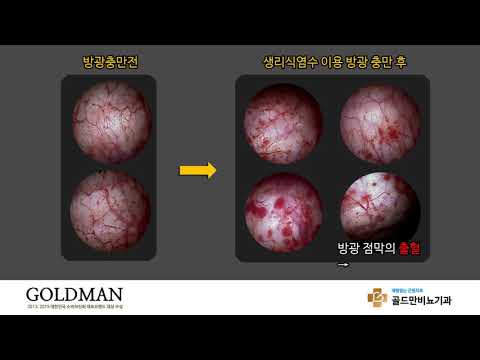
For an accurate diagnosis of bladder cancer, however, cystoscopy is essential to directly examine the inside of the bladder, prostate, and urethra.
Microscope

Urine cytology

A non-invasive screening test that checks urine for malignant cells under a microscope, useful for early detection.
Cystoscopy illustration

Cystoscopy

An endoscopic view inside the bladder and urethra, essential to confirm bladder cancer.

Bladder cancer treatment:
how does it proceed?

Treatment depends on the stage and extent of the cancer, so accurate diagnosis matters.If symptoms persist, retesting, a check for complications, and proper treatment are needed.
  • Injection and medication

    Adjuvant treatment

    When radical resection is difficult, chemotherapy and radiation therapy are combined, and managing side effects is important.
  • Walking aid

    Non-surgical treatment

    For multiple tumors or minimal invasion, a BCG (bacillus Calmette-Guérin) is instilled into the bladder to eliminate residual cancer and prevent recurrence.
  • Medical team performing surgery

    Surgical treatment

    Non-muscle-invasive bladder cancer is resected endoscopically; muscle-invasive cancer requires removing the bladder and lymph nodes with urinary diversion.

Why choose Goldman for early bladder cancer treatment as well?

Because everything from testing to follow-up care is complete!

  • Flexible endoscope equipment

    Step

    Accurate examination without pain

    Spinal anesthesia and a flexible endoscope reduce pain,
    while cystoscopy provides an accurate assessment
  • Image symbolizing diagnosis and treatment

    Step

    From diagnosis to treatment in one step

    Transurethral resection of bladder tumor (TURBT)
    removes the tumor in a single procedure and provides a biopsy at the same time
  • Image symbolizing follow-up care

    Step

    Thorough post-operative follow-up care

    Systematic follow-up and aftercare for 5 years
    Ultrasound examination and cystoscopy every 3 months

Bladder cancer prevention:
what can you do?

Quit smoking.Plenty of fluids and a diet rich in fruits and vegetables also help. High-risk groups should seek early diagnosis with regular urinalysis and urine cytology.
  • Quitting smoking

    Avoid smoking and secondhand smoke

  • Vegetables

    Drink plenty of fluids and eat fruits and vegetables

  • Processed foods

    Avoid meat and processed foods

  • Calendar

    Get regular bladder cancer screening

Questions about bladder cancer? Get answers now.

Goldman's know-how gives clear answers to patients' questions.
  • The most common symptom is painless hematuria — blood in the urine without any pain.

  • No. But hematuria is a hallmark of bladder cancer, so get examined.

  • It is more common in men, about 3–4 times the rate in women.

  • It is not contagious.Cancer is not a bacterium or virus, so it cannot be transmitted.

It’s Advanced!

TOP 7 Reasons Goldman Leads

GOLDMAN Special 7

1
7
  • Surgery scene
    Urology Only

    25 Years

    1
  • Reviewing treatment data
    Unrivaled Treatment Data

    2 Million+

    2
  • Specialist during surgery
    BPH Surgery Data

    6,500+

    3
  • Urinary stone treatment equipment
    Urinary Stone Treatment Data

    10,000+

    4
  • HoLEP surgery equipment
    Nationwide HoLEP Surgeries

    40.8% Performed

    5
  • Goldman Urology Clinic medical staff
    Experienced Medical Team

    25 Years of Clinical Experience

    6
  • AI symbolic image
    From Diagnosis to Surgery

    State-of-the-Art AI System

    7

Urological concerns?
Solve them at a Goldman near you.

If you consent to the use of location information, you can find the Goldman branch closest to you.